
What is Pectus?
Pectus is a medical term used to describe a chest that develops with an unusual or irregular shape. It involves the sternum (breastbone), ribs, and the cartilage that connects them and commonly becomes more noticeable during growth.
Pectus Anatomy and Occurrence
Learn more about the chest wall and its anatomy, when pectus first occurs, how growth can affect chest shape, differences in boys and girls, and clear, non-surgical care options with simple next steps to help you move forward with confidence.
Types of Pectus Chest Wall Conditions
- Pectus Excavatum – Sunken or caved in chest
- Pectus Carinatum – Protruding chest
- Combination or Mixed Pectus – Areas of the chest that are both sunken and protruding
- Flared Ribs – Lower ribs that protrude outward
Anatomy of the Chest
This is the area between the base of the neck, top of the stomach and extending from armpit to armpit. Doctors may refer to it as the chest wall. Let’s review the bones of the chest.
Sternum
The long bone that runs down the center of the chest. It has three parts:
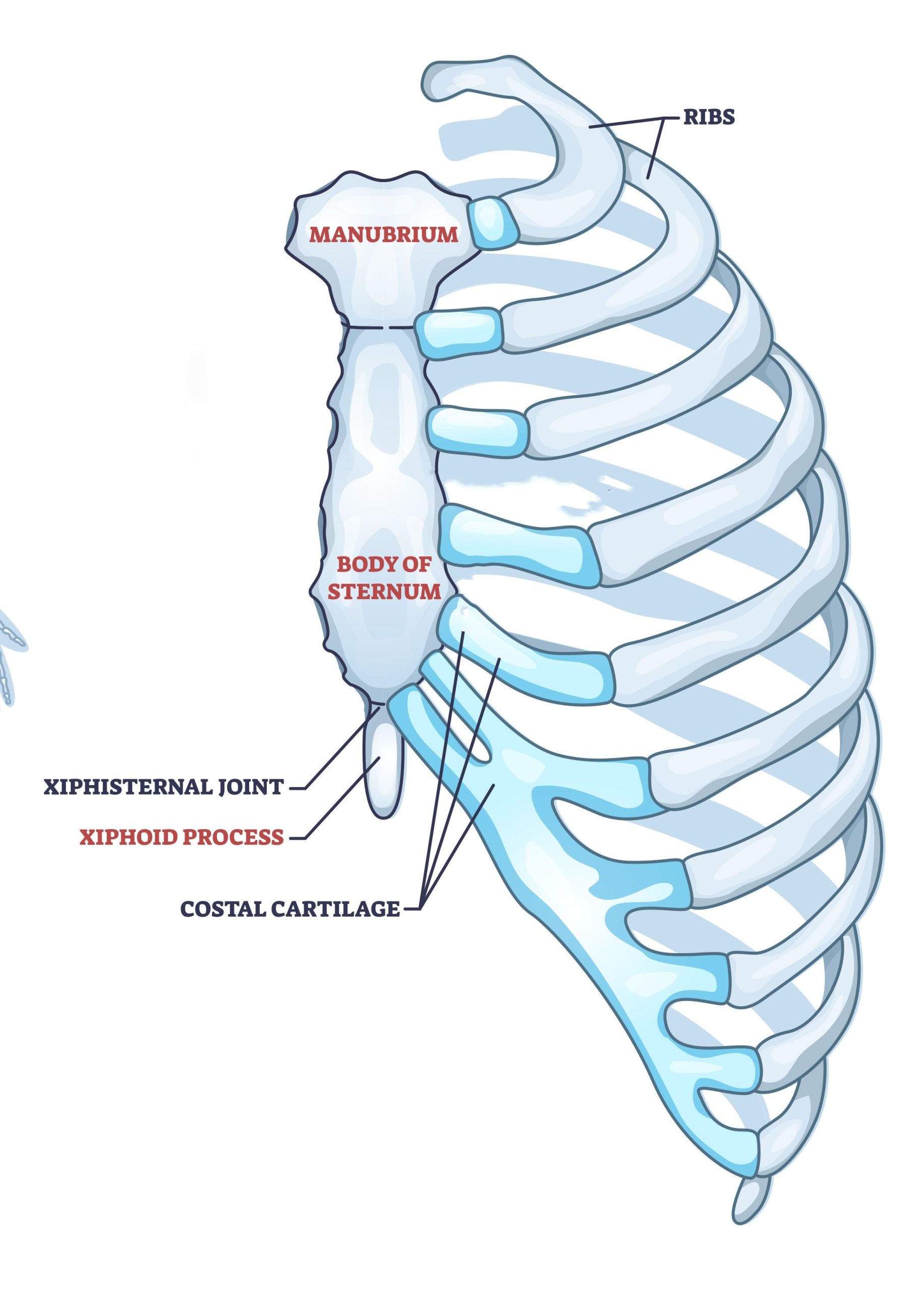
- Manubrium – the upper part of the sternum and somewhat triangular in shape, connects to the collar bones on each side.
- Gladiolus – also called the Body of the Sternum and is the longest part of the sternum and connects ribs 2-7. Most pectus deformities involve this portion of the sternum.
- Xiphoid – the narrow small loop shaped bone at the very bottom of the sternum serves as the attachment point for the abdominal muscles.
Ribs
The curved bones of the chest that originate at the vertebrae and connect to the sternum in the front thus forming the Rib Cage. In younger people the section of the ribs closest to the sternum is made of flexible cartilage – called costal cartilage. As one gets older the cartilage calcifies / stiffens becoming less flexible and limiting non-surgical improvement with compressive bracing.
What is Role of the Chest in the Body?
- Protection – the chest forms a strong protective cage around the heart and lungs shielding them from injury and external force.
- Breathing – the muscles between the ribs lift and expand the chest allowing fresh air to fill the lungs. These same muscles compress the lungs to exhale. Some kids with pectus may experience shortness of breath or reduced exercise tolerance, especially during growth spurts or with more pronounced chest wall changes.
How Common is Pectus?
- Pectus commonly affects approximately 1 in 300-400 children (Haecker FM, et al. Journal of Thoracic Disease, 2023) making it the most common chest wall deformity.
- In addition to published research, our clinical experience has shown that pectus often runs in families and may become more noticeable during growth spurts.
- Genetics / Family history is common, suggesting a genetic component. In our experience about 60% of kids have a family member who also has pectus.
- When there is a genetic component it can be traced to the maternal or mother’s side even if the mother doesn’t have pectus they may be a genetic carrier.
- Often pectus defects are subtle in early childhood. We describe this as ‘early’ pectus defect which in our clinical experience gets worse as the child gets older.
- We have found that in many cases pectus occurs in the oldest child, but if the oldest is a girl it commonly skips to the first born boy.

10 Years Old
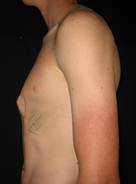
Same child at 14 Years Old
The photos above illustrate a common theme amongst parents when describing their child’s chest – “it suddenly came out of nowhere!” This rapid change can be alarming for parents but is a common pattern. An important reason why early evaluation and treatment is so important.
Occurrence of Pectus in Boys vs Girls
- Pectus is more commonly diagnosed in boys than in girls. In our clinical experience, we see an approximate ratio of 5 boys for every 2 girls.
- While pectus can affect both boys and girls, the timing and pattern of chest wall changes often differ, which can influence when families first notice the condition and when evaluation is most helpful.
|
|
Pectus in Boys-Most commonly becomes noticeable during rapid pubertal growth -Often appears or progresses between ages 12 and 14 -Chest wall changes may occur quickly over a short period of time -Parents are often surprised by how sudden the chest has changed shape |

Pectus in Girls-Often becomes noticeable at a younger age -May be visible as early as 6 years old -Early changes can be subtle at first and more noticeable with growth |
|

How Pectus Develops: Causes of Chest Wall Deformities?
In our experience we have found pectus defects to occur 3 ways:
1. Developmentally – pectus is often referred to as a developmental change. We have found this to be most common.
- Boys – occurs most commonly around ages 12-14 during a period or rapid growth and or with the onset of a pubertal growth spurt.
- Girls – shows at a younger age than boys from around 6 years old and up. This is because females skeletally mature at a younger age than boys.
2. Congenital – when a chest defect is visible right from birth or near infancy.
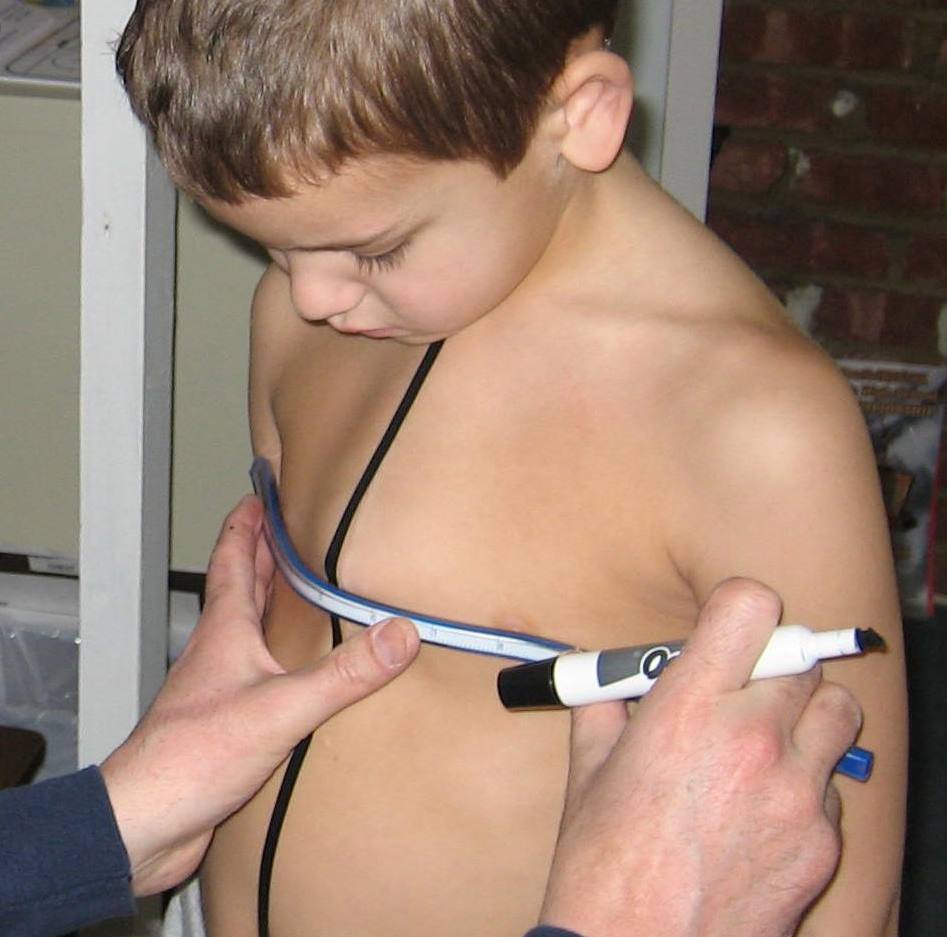
3. Post Surgery – in the rare occasion of chest surgery during infancy or early childhood. The surgical opening of the sternum may alter how the chest wall heals. This can be seen in the photos above. As the child grows, this disruption in the sternum may result in abnormal chest contouring, such as a visible protrusion or depression of the sternum.
|
Immediately After Heart Surgery |
Two Years Later Pectus Carinatum Developed |

Why Timing Matters for Non-Surgical Care
Growth plays a significant role in how pectus develops and changes over time. For many kids and teens, early evaluation allows for careful monitoring of chest wall changes and determine the most appropriate timing to begin non-surgical care if needed.
Seeing changes in your child’s chest can be concerning and unexpected. You’re not alone — pectus is common, our highly experienced Pectus Care Team is here to support you. We provide guidance on non-surgical options and help parents navigate the process with experience and confidence.
Take the next step to learn more about available non-surgical care and how we can help. We invite you to explore our services.
Let’s Get Started